
Orpheus dining table
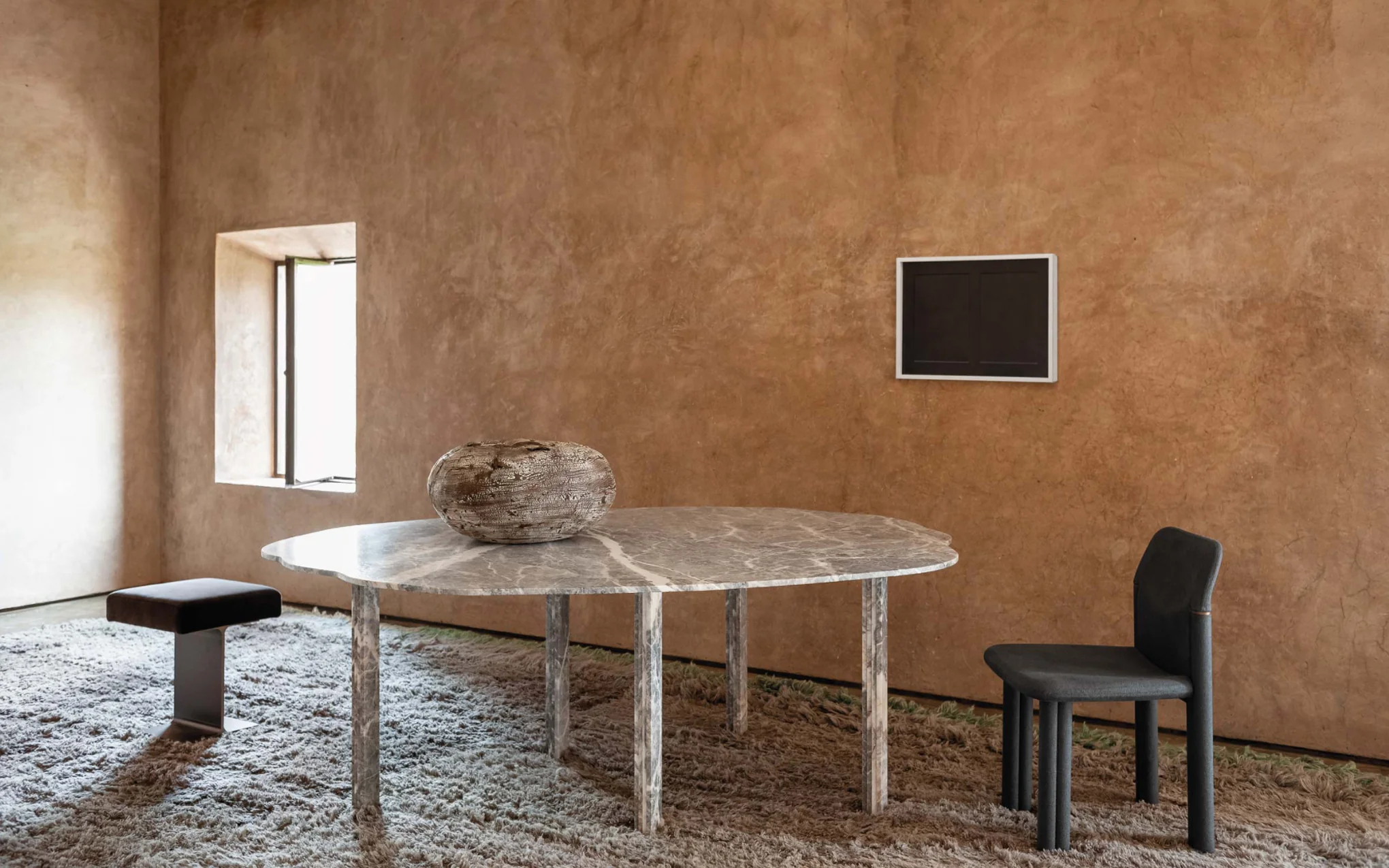
For this original dining table, Lorenzo Bini was inspired by the work of Cy Twombly transforming it into a piece of contemporary design.///Description
A marble top obtained by tracing a portion of the famous “Orpheus” painted in 1979 supported by five legs obtained by combining slightly staggered strips of the same marble becomes an invitation to take a seat to pay homage to the work from which it took its shape and the artist who created it.
A marble top obtained by tracing a portion of the famous “Orpheus” painted in 1979 supported by five legs obtained by combining slightly staggered strips of the same marble becomes an invitation to take a seat to pay homage to the work from which it took its shape and the artist who created it.
$50,000.00
Orpheus dining table—
$50,000.00
More Images


Orpheus dining table
For this original dining table, Lorenzo Bini was inspired by the work of Cy Twombly transforming it into a piece of contemporary design.///Description
A marble top obtained by tracing a portion of the famous “Orpheus” painted in 1979 supported by five legs obtained by combining slightly staggered strips of the same marble becomes an invitation to take a seat to pay homage to the work from which it took its shape and the artist who created it.
A marble top obtained by tracing a portion of the famous “Orpheus” painted in 1979 supported by five legs obtained by combining slightly staggered strips of the same marble becomes an invitation to take a seat to pay homage to the work from which it took its shape and the artist who created it.
Product Information
Product Information
Shipping & Returns
Shipping & Returns
Description
For this original dining table, Lorenzo Bini was inspired by the work of Cy Twombly transforming it into a piece of contemporary design.///Description
A marble top obtained by tracing a portion of the famous “Orpheus” painted in 1979 supported by five legs obtained by combining slightly staggered strips of the same marble becomes an invitation to take a seat to pay homage to the work from which it took its shape and the artist who created it.
A marble top obtained by tracing a portion of the famous “Orpheus” painted in 1979 supported by five legs obtained by combining slightly staggered strips of the same marble becomes an invitation to take a seat to pay homage to the work from which it took its shape and the artist who created it.